Saturday, June 26
Well, we are most definitely "tourists" now.
After a light breakfast at Institute Saint Sebastian in Salzburg, we checked out of our room. The kind woman working the desk allowed us to leave our bags in a locked closet in her work area, however, so we took advantage of that.
Our plan was to walk a few blocks down to where a couple of the local tour groups' booking stations were located to inquire about jumping on a morning "Sound of Music Tour."
I know what most of you guys are thinking...
But anyway, we were able to get two seats on that morning's four-hour bus tour. And it was actually cooler than I thought it would be. Riding around Salzburg in a tour bus filled with people singing "The Hills are Alive," "Edelweiss," "Doe-Ray-Me," and "I Must Have Done Something Good" had me feeling a little skeptical. But our tour guide, a witty Brit named Trudy who wore a traditional Austrian dress, made it quite enjoyable.
We visited numerous places around town that were used during filming, such as the two castles that served as the von Trapp family home (they used one facade for the front of the house and another building all together for scenes shot in the back), the famous gazebo and the church were the captain and Maria were married.
That church, located in Mondsee, actually had a wedding ceremony going on at the very time we went inside. We stayed in the back taking pictures (if it was my wedding; I would have been kind of upset). But really, the church was so large--and there was music playing at the time--that I don't think anyone noticed.
We did get a lot of great pictures during the tour. And it was something that Brooke really wanted to do (I get the impression that women get a LOT of enjoyment out of this particular tour) so it was well worth it. And like I said, I had more fun than I expected.
After the tour, we walked back to retrieve our bags and we then headed for the car park. I owe John Painter big-time for agreeing to temporarily swap my Magellan for his Garmin GPS device, as his works in Europe. It made our drive to Saint Wolfgang, Austria so easy. All told, it took us less than an hour to arrive at our hotel: Hotel Cortisen am see.
At the age of 30, I am willing to say that this is the coolest place I will ever stay at in my life. Leading up to this vacation, this is the hotel I was most excited about. We had a particular suite reserved (you could view panoramas of the rooms on the hotel Web site), and it is a "no kids" establishment right on the lake.
You have some laundry you want done? Bring it down, we'll do it for free. You want to use our sauna and steam room on the third floor? Let us know, we'll just turn it on for you. You want to ride a bike or mountain bike around the village for the day? Just let us know, no charge for the bikes. You want to take our rowboat out on the lake? No charge.
They also offer a Harley, but there is a fee to rent that.
If you ever consider coming to Austria, you really ought to give this place a look.
After checking in, we explored the property a little bit, checking out the cigar room, the library (with free books, DVDs and CDs to use), the bar, the lakeside sun deck... everything clearly laid out and designed by a top-notch decorator.
Then we decided to stroll through the village and explore while at the same time looking at restaurant menus. One lakefront hotel, Hotel-Peter, had a terrace restaurant out back, and the menu looked great, so we gave it a try.
Now, I love Switzerland like I can't even begin to explain. But it's very expensive. At Hotel-Peter, our total order included two Cokes (you don't get free refills of ANYTHING in Europe), a beer, a bowl of soup, an entree of fresh fish caught in the lake and each prepared a different way(intended for two people to share) and two homemade desserts. All of that, and our bill was 51,70 Euros!!! I was pleasantly shocked--though I should have been a bit prepared for that when our lunch in Mondsee that afternoon during our tour came to 11,00 Euros (two drinks and a pizza).
So that's another great aspect about Austria. And the scenery is just as nice as it is in Switzerland.
After dinner, Brooke made use of the jacuzzi tub in our suite while I opened the door to our balcony and updated my Europe journal/blog. Then we watched the damn USA-Ghana World Cup match.
Germany plays England Sunday. That is a really big deal here since we're just a couple miles from Germany. In fact, I'm quite certain that some of the mountains that surround us are on Germany's side of the border.
Quick shout-out to Allix Bullock for everything she's doing for us while we're gone. We know the house and Crockett are both in good hands.
Sunday, June 27, 2010

Saturday, June 26, 2010
Europe 2010 - Days 6-7
Day 6 - Thursday, June 25
The first thing we did following breakfast (at the hotel) Thursday in Luzern was visit the Post headquarters to inquire about the cost and ease of shipping some items back home. We had already bought some items, and there were some others we were considering purchasing if we knew we wouldn't have to add them to our baggage and cart them around for the remainder of the trip.
Feeling as though it would be both simple and affordable to make an "economy" (11-14 days) shipment home, we finished up shopping. I returned to a store that sold a lot of World Cup merchandise from numerous countries--the most common in stores here are Switzerland, Germany, Brazil, Argentina, Portugal, Italy and USA--and I purchased a child-sized red Switzerland jersey for Crockett. He's going to love showing it off to folks back home, proudly touting his ancestry.
After we made all our final purchases, we proceeded back to the Post headquarters and shipped a box full of goods home.
It was about that time that we were ready for lunch, so we grabbed an outdoor table at Restaurant Fritschi (in that photo, you'll see the umbrella-covered tables where we sat) and each ordered a salad. Brooke got the Fritschi salad--the house special--and I felt brave and went for the sausage and cheese salad. It didn't disappoint, though it was different than most any other salad I've tried before.
Since we were close to the lakefront, we looked into the various Lake Luzern cruises that were offered that day. Our Swiss passes give us free access to all buses, boats and lifts in Switzerland (with about 4-5 exceptions), and we were just looking for something quick to take in the midday views from the middle of the lake. So we waited about 45 minutes next to the lake before boarding a boat named "Rutli" for a nice, one-hour cruise.
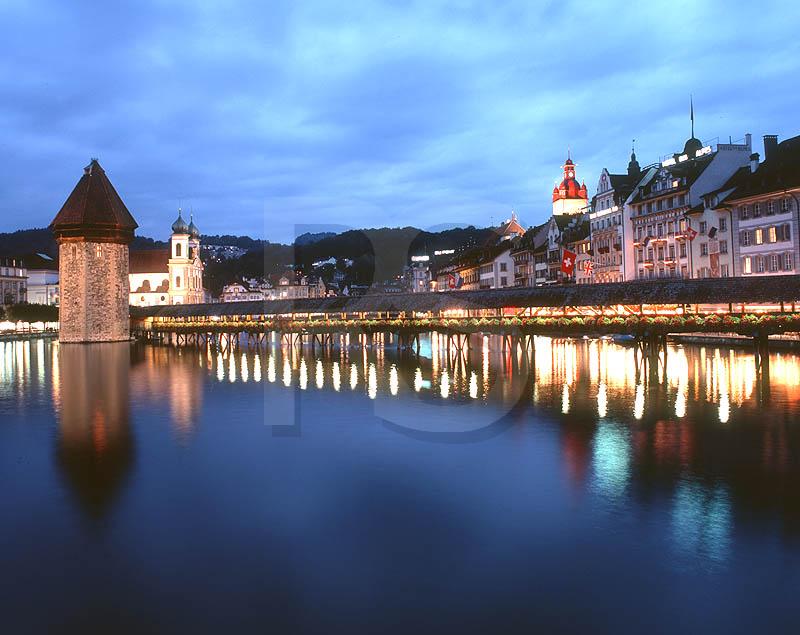
For dinner, we decided to wait for a table to open up at the http://www.rathausbrauerei.ch/, which sits near the famous "Chapel Bridge" on the riverfront in the old town. I ordered fried perch filets, and they were exceptional. It was yet another great setting for a waterfront sunset dinner. Check out my video of our view.
Knowing our time in Luzern was essentially over, we went to bed looking forward to Friday morning's train ride to Salzburg, Austria.
Day 7 - Friday, June 26
Since we had no more days remaining on our Swiss passes, I had purchased our point-to-point tickets from Luzern to Salzburg (with a train change in Zurich) prior to our departure from home.
The first "reserved" portion of the trip was an 8:45 train in Zurich, so we had to make sure to be in Zurich by that time--preferably at least 10 minutes early so we could find the right track.
That meant skipping breakfast at Jailhotel and catching an early (7:40) train to Zurich. That got us there in time to find our train to Salzburg with about five minutes to spare.
We had seats 95 and 97 reserved; and that is where we were sitting. But at one particular small-town stop, a group of about 6-8 (German?) teenage boys boarded the train and tried telling us we were in their seats. They were polite about it, but I showed them our reservation certificate showing our seat numbers.
"I think you are on the wrong coach," one of them said.
He pointed to a section on the ticket that had the number 252 on it. He then showed us how to tell which coach we were on... and it was 354. So I told them "I'm sorry" in German (I was proud they understood me) and we waited in an area in-between coaches until the next stop, at which point we exited the train, walked up about 15 cars and then re-entered. That was a lot easier than trying to walk through about 15 coaches with all our luggage, because all the coaches were quite full at that point.
We got to Salzburg--one of the greatest Baroque cities north of the Alps--at about 2:15 p.m., and luckily our rental-car pickup point was only about two blocks from the train station. We picked up our tiny, navy blue VW sedan and drove to a "car park" that is basically a parking garage cut into a mountain beneath the Salzburg fortress.
I didn't have a hotel booked for our lone night in Salzburg, so this was the first day of the trip I planned on winging it in terms of lodging. The first place we inquired at was booked up, as there was a music festival going on in the portion of town I had planned on staying in.
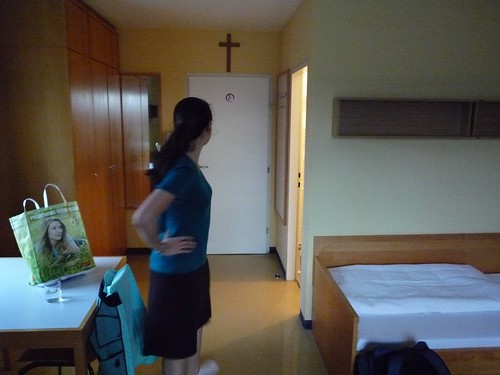
The second place we planned on trying was called "Institute St. Sebastian." It's actually a historic old church building that has been converted into a girls' dorm for students at various college in Salzburg. During the school year, it rents about 20 single rooms. But when the girls are gone, all the rooms are available, including some doubles.
We were in luck, as they had a double for only 71 Euros for the night (it had a private bathroom, and the price included breakfast).
With lodging secured, we embarked on a walk around the historic old town (south of the river) and new town (north of the river). We saw Mozart's birthplace, the residence in which he lived as a young man when he wasn't touring Europe's major cities and many sites (such as Mirabell Gardens) where they filmed outdoor scenes in "The Sound of Music."
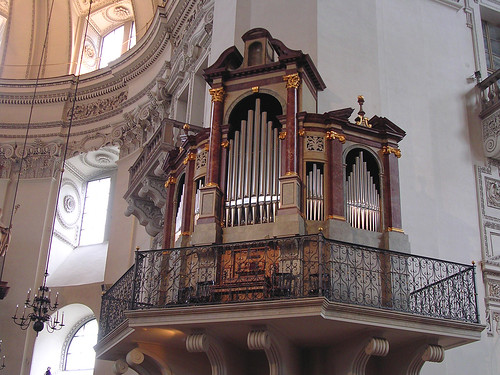
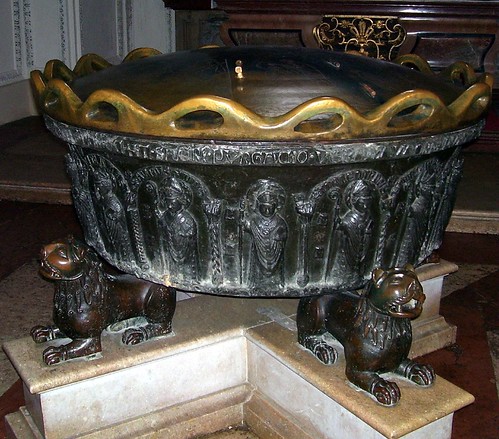
But Brooke and I both thought the most impressive part of Salzburg was the Salzburg Cathedral. There were many, many bishops entombed both in the sanctuary as well as in the crypt below the altar (which was open to those willing to venture in; we did). The interior was more beautiful than my words, or even my pictures and videos, can do justice. It features five organs, and Mozart himself was the main organist there for two years. Speaking of Mozart, the font in which he was baptized is there in the cathedral. It dates to 1320.
I could go on and on about how impressive that place was, but like I said, I can't do the place the justice. It just has that "feel" to it, and it's the kind of man-made structure that has a way of humbling you. I couldn't leave without dipping my fingers in the Holy water and making the sign of the cross.
We also visited the Abbey Church of St. Peter, in which St. Rupert is entombed. I left a donation and lit a candle for my Aunt Boots.
For dinner, we ventured off the touristy streets and opted to eat at http://www.dieweisse.at/, which is a favorite spot for the locals to go for sausage. We both ordered the bratwurst with kraut. Hey, what else?
Finally it was back to our "dorm room" at Institute St. Sebastian, where we slept soundly in our third-floor room with the window open all night.
PS: Traveler Tip: If you ever visit Salzburg, don't plan on sleeping in. There are so many churches; the bells will have you up and at 'em quite early.
PPS: I've uploaded quite a few photos to Facebook and hope to get some others posted as well.
The first thing we did following breakfast (at the hotel) Thursday in Luzern was visit the Post headquarters to inquire about the cost and ease of shipping some items back home. We had already bought some items, and there were some others we were considering purchasing if we knew we wouldn't have to add them to our baggage and cart them around for the remainder of the trip.
Feeling as though it would be both simple and affordable to make an "economy" (11-14 days) shipment home, we finished up shopping. I returned to a store that sold a lot of World Cup merchandise from numerous countries--the most common in stores here are Switzerland, Germany, Brazil, Argentina, Portugal, Italy and USA--and I purchased a child-sized red Switzerland jersey for Crockett. He's going to love showing it off to folks back home, proudly touting his ancestry.
After we made all our final purchases, we proceeded back to the Post headquarters and shipped a box full of goods home.
It was about that time that we were ready for lunch, so we grabbed an outdoor table at Restaurant Fritschi (in that photo, you'll see the umbrella-covered tables where we sat) and each ordered a salad. Brooke got the Fritschi salad--the house special--and I felt brave and went for the sausage and cheese salad. It didn't disappoint, though it was different than most any other salad I've tried before.
Since we were close to the lakefront, we looked into the various Lake Luzern cruises that were offered that day. Our Swiss passes give us free access to all buses, boats and lifts in Switzerland (with about 4-5 exceptions), and we were just looking for something quick to take in the midday views from the middle of the lake. So we waited about 45 minutes next to the lake before boarding a boat named "Rutli" for a nice, one-hour cruise.
For dinner, we decided to wait for a table to open up at the http://www.rathausbrauerei.ch/, which sits near the famous "Chapel Bridge" on the riverfront in the old town. I ordered fried perch filets, and they were exceptional. It was yet another great setting for a waterfront sunset dinner. Check out my video of our view.
Knowing our time in Luzern was essentially over, we went to bed looking forward to Friday morning's train ride to Salzburg, Austria.
Day 7 - Friday, June 26
Since we had no more days remaining on our Swiss passes, I had purchased our point-to-point tickets from Luzern to Salzburg (with a train change in Zurich) prior to our departure from home.
The first "reserved" portion of the trip was an 8:45 train in Zurich, so we had to make sure to be in Zurich by that time--preferably at least 10 minutes early so we could find the right track.
That meant skipping breakfast at Jailhotel and catching an early (7:40) train to Zurich. That got us there in time to find our train to Salzburg with about five minutes to spare.
We had seats 95 and 97 reserved; and that is where we were sitting. But at one particular small-town stop, a group of about 6-8 (German?) teenage boys boarded the train and tried telling us we were in their seats. They were polite about it, but I showed them our reservation certificate showing our seat numbers.
"I think you are on the wrong coach," one of them said.
He pointed to a section on the ticket that had the number 252 on it. He then showed us how to tell which coach we were on... and it was 354. So I told them "I'm sorry" in German (I was proud they understood me) and we waited in an area in-between coaches until the next stop, at which point we exited the train, walked up about 15 cars and then re-entered. That was a lot easier than trying to walk through about 15 coaches with all our luggage, because all the coaches were quite full at that point.
We got to Salzburg--one of the greatest Baroque cities north of the Alps--at about 2:15 p.m., and luckily our rental-car pickup point was only about two blocks from the train station. We picked up our tiny, navy blue VW sedan and drove to a "car park" that is basically a parking garage cut into a mountain beneath the Salzburg fortress.
I didn't have a hotel booked for our lone night in Salzburg, so this was the first day of the trip I planned on winging it in terms of lodging. The first place we inquired at was booked up, as there was a music festival going on in the portion of town I had planned on staying in.
The second place we planned on trying was called "Institute St. Sebastian." It's actually a historic old church building that has been converted into a girls' dorm for students at various college in Salzburg. During the school year, it rents about 20 single rooms. But when the girls are gone, all the rooms are available, including some doubles.
We were in luck, as they had a double for only 71 Euros for the night (it had a private bathroom, and the price included breakfast).
With lodging secured, we embarked on a walk around the historic old town (south of the river) and new town (north of the river). We saw Mozart's birthplace, the residence in which he lived as a young man when he wasn't touring Europe's major cities and many sites (such as Mirabell Gardens) where they filmed outdoor scenes in "The Sound of Music."
But Brooke and I both thought the most impressive part of Salzburg was the Salzburg Cathedral. There were many, many bishops entombed both in the sanctuary as well as in the crypt below the altar (which was open to those willing to venture in; we did). The interior was more beautiful than my words, or even my pictures and videos, can do justice. It features five organs, and Mozart himself was the main organist there for two years. Speaking of Mozart, the font in which he was baptized is there in the cathedral. It dates to 1320.
I could go on and on about how impressive that place was, but like I said, I can't do the place the justice. It just has that "feel" to it, and it's the kind of man-made structure that has a way of humbling you. I couldn't leave without dipping my fingers in the Holy water and making the sign of the cross.
We also visited the Abbey Church of St. Peter, in which St. Rupert is entombed. I left a donation and lit a candle for my Aunt Boots.
For dinner, we ventured off the touristy streets and opted to eat at http://www.dieweisse.at/, which is a favorite spot for the locals to go for sausage. We both ordered the bratwurst with kraut. Hey, what else?
Finally it was back to our "dorm room" at Institute St. Sebastian, where we slept soundly in our third-floor room with the window open all night.
PS: Traveler Tip: If you ever visit Salzburg, don't plan on sleeping in. There are so many churches; the bells will have you up and at 'em quite early.
PPS: I've uploaded quite a few photos to Facebook and hope to get some others posted as well.
Friday, June 25, 2010
Europe 2010 – Days 3-5
Sorry for the absence of our Monday (June 21) update. We milked our day for all it worth. In fact, we cut it as close as possible and could easily have been stranded away from our hotel for the night. But I’ll get to that later.
The forecast in the Berner Oberland region called for fog and rain again Monday, thus wiping out our chances of paragliding there. I’m quite bummed about that, but there’s always next time (I’m already working on Brooke, trying to talk her into a return to Switzerland in the summer of 2012).
So rather than hope the clouds would clear long enough to catch some good glimpses of the peaks of Eiger, Monch and Jungfrau, I called an audible and we set off for Lake Geneva. Originally I hadn’t planned on visiting the French-speaking part of Switzerland this time around—we spent a couple days in Montreux in 2006—but Lausanne (loh-zahn) seemed like an interesting destination. The city is built along a steep hillside overlooking Lake Geneva. It boasts a nice lakefront district (Ouchy) as well as an “Old Town” area. And had it not been for the easy-to-use metro train that whisks back and forth from the waterfront to the top of the town where its cathedral resides, we would have had some sore legs.
My only complaint about Lausanne was the noise, and that wasn’t even the locals’ fault. Portugal played a World Cup game Monday, and I don’t have a clue why, but I think every fan of Portugal soccer who was not in South Africa Monday was in Lausanne—and they all had those damn vuvuzelas! Portugal ended up beating whoever it was they played, and these fanatics paraded through town, blowing the vuvvuzelas, blowing air horns, honking their car horns, singing and waving flags out their car windows or wearing the flag as a cape—or best of all: wearing the flag as a cape while hanging out the window of a moving car and simultaneously blowing a vuvuzela.
We had a nice lunch in a small eatery on a cobblestone side street, but the woman who took our order at the counter had little patience for those who couldn’t speak French. We didn’t care much for her. That kind of experience seems to be common in the French-influenced region of Switzerland. The German areas seem to be much more warm and welcoming. It’s interesting picking up on those sorts of things as you travel from place to place.
We decided we’d have dinner at a particular restaurant in Interlaken that has received many good reviews. But on the way from Lausanne to Interlaken, we stopped in Bern again to visit some of the shops that were closed when we visited there on Sunday.
I found a great paisley blue pocket square that was on sale in one of the men’s clothing stores on the main street, and Brooke found a pair of earrings in the Swarovski crystal store. So… that cleared the way for me to get the clearance on some black crystal Swarovski cuff links that I look forward to rockin’ during the 2010-11 season!
We finally got to Interlaken and had a solid meal of cordon bleu (me) and rosti with fried egg (Brooke) at Restaurant Baren. We also had apple pie and ice cream with fresh strawberries, respectively, for dessert.
Things did clear up enough by the evening that we saw a very colorful sunset over the mountaintops from the window at our booth in the restaurant. We had kind of lost track of time. It was already dark when we boarded the train at the Interlaken Ost (East) station en route to Lauterbrunnen. When we finally got to Lauterbrunnen, we had to wait nearly an hour for the last bus of the night that headed to the cable car station.
Remember, you can’t drive up to Gimmelwald; you must take the cable car. If you miss the last one, you are out of luck and I guess you would have to basically beg the driver to take you back to Lauterbrunnen and then hope to find a hotel room there.
So our 11:28 bus finally arrives at the stop, and we make it to the Schilthornbahn station just in time for the 11:45 cable car up to Gimmelwald (last of the night). The station attendant literally turned off all the lights and locked up the station right before we started the ascent.
When we got to Gimmelwald, there was some poor guy who must have been out drinking or doing something in Murren, and he tried to get on the cable car as we were getting off. But there was absolutely no way they were going to take that one passenger back down after they had already closed up the station for the night. Heck, when Brooke and I rode up on the last car, we were two of only six people on board—and that includes the operator!
As that poor guy and the operator tried to talk back and forth, Brooke and I headed for our room at Pension Gimmelwald (only about a 100-yard walk from the station). I would really love to know what that guy ended up doing. I’ll bet anything he had a car at the Schiltohornbahn station lot and he was trying to get back to it. Who knows what the guy did. If he tried hiking down, he’s probably still walking (or dead from falling off the ledge in the pitch black night).
Day 4 – Tuesday, June 22, 2010
We decided to skip breakfast at the Pension today and hit the road early. I checked out and said goodbye to David and the crew at the Pension. I hope to be back there again for a third stay at some point.
I’m writing this from Murten, which was today’s ultimate destination. We arrived here in town just after noon and checked right in at Hotel Murtenhof & Krone. What a great hotel in a great city! This place has a great vibe and a lot of history to it.
Unbeknownst to me, our arrival in Murten coincided perfectly with an annual celebration. June 22 is comparable to the Fourth of July in the states.
On July 22, 1476, Mighty Charles the Bold and his well-armed 20,000 Burgundian forces, who had been laying siege to Murten for 10 days, were surprise attacked by a makeshift Swiss army of about 10,000. They compare the Swiss surprise attack, which took place when Charles’ forces were hungover from a Midsummer Night’s Eve celebration, to George Washington’s attack on the British when the Brits were celebrating Christmas. All 20,000 Burgundians were slaughtered; many of them were driven into the lake in their armor, where they naturally drowned. French bones washed ashore here for centuries (Charles escaped on horseback, bloody hell!).
So today the main streets were closed to traffic and there was celebrating in the streets all day long. All the children get out of school and come to town dressed in white. It was really something cool to be a part of as we walked along the cobble stone streets and took in all the excitement.
Popular American travel writer Rick Steves touted Hotel Murtenhof & Krone’s lakeside terrace restaurant as the best in town. He also exclaimed, “sipping a glass of local white wine, with the right travel partner, while gazing across the lake at hillside vineyards as the sun sets, is one of Europe’s fine moments.”
So, we reserved a table for 8:30 p.m.—after being told the sun would set at 9 p.m.—and the experience was outstanding. It was certainly among my top three or four dining experiences ever. We both got perch (known here as “egli filets” and a local favorite) with different sides. Brooke got a red wine from across the lake since she had a white wine the previous night in Interlaken. We got some great photos of the sun setting over the lake. It was the kind of dinner that defines a top-notch vacation.
But… there was one other experience today that rivaled our dinner. Right after checking into the hotel, we went to the local co-op grocery and bought items for a picnic. We then walked back to the Bahnhof (train station) and rented bikes. I had planned to make the approximately 9 km bike ride to Avenches for a picnic at the Roman ruins there.
Avenches was once known as Aventicum, and it was the Roman capital of Helvetia. It was one of the largest cities in the Roman Empire and in recent years has often won the title of “most livable place to retire.” I can definitely see why. Its population now is very small, and not a lot of tourists know about the place. So you can be sitting on some old Roman ruins from the days of Emperor Marcus Aurelius all by yourself, enjoying the world’s coolest picnic.
We biked around and saw the old Roman amphitheater, the remains of an ancient sanctuary and some smaller theater ruins. The lone standing tower of the original 73 towers that lined the city walls in ancient times now houses a museum with some really interesting artifacts that have been dug up over the centuries. The coolest item is a gold bust of Marcus Aurelius (circa 80 A.D.) that was found in an Avenches sewer in 1939! The French woman attending the small museum in the tower offered a book explaining the contents of each exhibit in English, and our Swiss Passes granted us free admission. We spent the better part of an hour in there and I saw a lot of really awesome stuff that is certainly priceless—much of it in great shape given its age.
Biking through some peaceful fields and past numerous small farms was really, really enjoyable. I found myself thinking, “I can’t believe this. I’m biking along the Swiss countryside right now.” We’re really fortunate to be able to experience things like that.
Brooke is out cold right now, and our bedside clock is displaying 23:13 (that’s 11:13 p.m. ET for the folks back home), so I better wrap it up.
Tomorrow we’ll walk around a bit more here in Murten in the morning and then make our way to Luzern for a couple days.
We really miss Crockett. We’ve seen some great-looking Bernese Mountain Dogs here and wish Crockett was with us to meet them. They may be distant relatives
Day 5 – Wednesday, June 23
We woke up and showered before heading to the complimentary breakfast spread at Hotel Murtenhof & Krone. I explained how fantastic dinner was Tuesday night at their terrace restaurant; well the views from their breakfast sun room were just as gorgeous. The morning view overlooking Lake Murten made for a great setting in which to enjoy an impressive spread that included fresh breads, meats, cheeses, yogurt, granola and fresh fruit.
After breakfast we walked around the cobblestone streets of the town in the area known as the “ramparts.” Brooke had wanted to visit a few stores that were closed when we passed through on Tuesday.
We then made our way back to the hotel to pack our bags for the 11 a.m. checkout. Then we were off to the train station, ready to make our way to Luzern.
We arrived in Luzern right at 1 p.m. It’s the first city we visited during our honeymoon trip in August of 2006. I don’t know what it is about this place exactly, but it’s definitely one of my favorite places I’ve ever been to. It just has that great European feel to it (a video I shot).
We returned to a familiar hotel, Jailhotel Lowengraben, which is actually a former jail (our room door is a wooden jail door and our room window has bars running from top to bottom when you open the glass panes.
Brooke isn’t the biggest fan of Jailhotel, mainly because it has a disco on street level (we’re just one level above) that stays open to very early in the morning—I think it’s 5 a.m. on the weekends and I’m not sure about weeknights.
But there’s no place like it. Folks who stayed in the room previously have written messages on the cinder blocks in the wall such as “Nothing like this in Australia! Thanks for making this the most memorable stay of our European holiday. – Mary & Paul, Queensland”
Yes, I added to the "graffiti."
We had a nice dinner at a cozy side-street restaurant called Fondue House. I’ll let you guess what we had. Fondue meals are priced per person and are usually among the most expensive things you find on most menus. It was for that reason that we decided to pass on a fondue experience during our honeymoon. But this time we gave in, thinking that we really couldn’t make two trips to Switzerland without having said we tried it. I couldn’t eat like that often, but it was very good and a nice change.
We continued to wander around town, taking in the sights. Of course, you can’t do Luzern without walking across Chapel Bridge. I also wandered over to the huge and ornately designed Post headquarters to check their hours. We may make some purchases tomorrow if it’s not too terribly expensive to ship them home—we’re not interested in doubling the amount of baggage we have to haul with us with more than a week remaining here in Europe.
Speaking of purchases, I thought the $4,000 Swiss watches I saw earlier in the week were impressive. Well today I saw some designer Swiss watches priced at $40,000, $32,500 and $28,000. Who buys this stuff?
Then we ducked into a dimly lit pub called “Bar Konige” to get a couple drinks while watching the Germany-Ghana World Cup match with a bar full of rabid Deutschland fans. Soccer fans don’t mess around over here. Luckily for all involved, Germany emerged with a 1-0 victory. It was interesting that our bartender was a Brit. She seemed more interested in the Australia-Serbia match. Am I crazy or didn’t Australia start out as an “island prison” used for deported Brits? I could totally be making that up. I don’t know.
During our walk back to Jailhotel, the streets were alive with honking car horns, proud chanting soccer fans and, of course, a chorus of vuvuzelas.
Oh! Prior to Bar Konige, we had made a rest stop in our hotel room before walking over to the Post headquarters. It was around that time that the Germany-Ghana game was just getting started. We heard a lot of commotion going on right outside our window. So I climbed up on the bed and peered out to see about 50 people looking right at me. Apparently the landing outside or room was being used for a World Cup viewing party sponsored by some European energy drink, and they were using the exterior wall of our room as a projector screen for the game!
Educational nugget of the day: I learned today how to say cuff links in German. Phonetically, it’s man-CHET-in kuh-NOP-fay (I’ve said that over and over to myself all day long. Try it. It’s fun to say). One place sold cuff links that were roulette wheels, and there was even a little ball inside that could land on the numbers. If anybody needs a pair like that, they were only CHF 25 (close to $25). Let me know.
I’m now about to hit the sack for the first of two nights in Luzern. Then we’ll be off to explore new territory along the Germany-Austria border. I hope that all is well back in the states.
Tom
PS: I'm posting this from Salzburg, Austria, on Friday night (June 25). I'm two days behind but will try to get caught up. Some highlights from the past two days: Cruise on Lake Lucerne, Mozart's birthplace and the Salzburg Cathedral (no photos or videos can do that place justice).
The forecast in the Berner Oberland region called for fog and rain again Monday, thus wiping out our chances of paragliding there. I’m quite bummed about that, but there’s always next time (I’m already working on Brooke, trying to talk her into a return to Switzerland in the summer of 2012).
So rather than hope the clouds would clear long enough to catch some good glimpses of the peaks of Eiger, Monch and Jungfrau, I called an audible and we set off for Lake Geneva. Originally I hadn’t planned on visiting the French-speaking part of Switzerland this time around—we spent a couple days in Montreux in 2006—but Lausanne (loh-zahn) seemed like an interesting destination. The city is built along a steep hillside overlooking Lake Geneva. It boasts a nice lakefront district (Ouchy) as well as an “Old Town” area. And had it not been for the easy-to-use metro train that whisks back and forth from the waterfront to the top of the town where its cathedral resides, we would have had some sore legs.
My only complaint about Lausanne was the noise, and that wasn’t even the locals’ fault. Portugal played a World Cup game Monday, and I don’t have a clue why, but I think every fan of Portugal soccer who was not in South Africa Monday was in Lausanne—and they all had those damn vuvuzelas! Portugal ended up beating whoever it was they played, and these fanatics paraded through town, blowing the vuvvuzelas, blowing air horns, honking their car horns, singing and waving flags out their car windows or wearing the flag as a cape—or best of all: wearing the flag as a cape while hanging out the window of a moving car and simultaneously blowing a vuvuzela.
We had a nice lunch in a small eatery on a cobblestone side street, but the woman who took our order at the counter had little patience for those who couldn’t speak French. We didn’t care much for her. That kind of experience seems to be common in the French-influenced region of Switzerland. The German areas seem to be much more warm and welcoming. It’s interesting picking up on those sorts of things as you travel from place to place.
We decided we’d have dinner at a particular restaurant in Interlaken that has received many good reviews. But on the way from Lausanne to Interlaken, we stopped in Bern again to visit some of the shops that were closed when we visited there on Sunday.
I found a great paisley blue pocket square that was on sale in one of the men’s clothing stores on the main street, and Brooke found a pair of earrings in the Swarovski crystal store. So… that cleared the way for me to get the clearance on some black crystal Swarovski cuff links that I look forward to rockin’ during the 2010-11 season!
We finally got to Interlaken and had a solid meal of cordon bleu (me) and rosti with fried egg (Brooke) at Restaurant Baren. We also had apple pie and ice cream with fresh strawberries, respectively, for dessert.
Things did clear up enough by the evening that we saw a very colorful sunset over the mountaintops from the window at our booth in the restaurant. We had kind of lost track of time. It was already dark when we boarded the train at the Interlaken Ost (East) station en route to Lauterbrunnen. When we finally got to Lauterbrunnen, we had to wait nearly an hour for the last bus of the night that headed to the cable car station.
Remember, you can’t drive up to Gimmelwald; you must take the cable car. If you miss the last one, you are out of luck and I guess you would have to basically beg the driver to take you back to Lauterbrunnen and then hope to find a hotel room there.
So our 11:28 bus finally arrives at the stop, and we make it to the Schilthornbahn station just in time for the 11:45 cable car up to Gimmelwald (last of the night). The station attendant literally turned off all the lights and locked up the station right before we started the ascent.
When we got to Gimmelwald, there was some poor guy who must have been out drinking or doing something in Murren, and he tried to get on the cable car as we were getting off. But there was absolutely no way they were going to take that one passenger back down after they had already closed up the station for the night. Heck, when Brooke and I rode up on the last car, we were two of only six people on board—and that includes the operator!
As that poor guy and the operator tried to talk back and forth, Brooke and I headed for our room at Pension Gimmelwald (only about a 100-yard walk from the station). I would really love to know what that guy ended up doing. I’ll bet anything he had a car at the Schiltohornbahn station lot and he was trying to get back to it. Who knows what the guy did. If he tried hiking down, he’s probably still walking (or dead from falling off the ledge in the pitch black night).
Day 4 – Tuesday, June 22, 2010
We decided to skip breakfast at the Pension today and hit the road early. I checked out and said goodbye to David and the crew at the Pension. I hope to be back there again for a third stay at some point.
I’m writing this from Murten, which was today’s ultimate destination. We arrived here in town just after noon and checked right in at Hotel Murtenhof & Krone. What a great hotel in a great city! This place has a great vibe and a lot of history to it.
Unbeknownst to me, our arrival in Murten coincided perfectly with an annual celebration. June 22 is comparable to the Fourth of July in the states.
On July 22, 1476, Mighty Charles the Bold and his well-armed 20,000 Burgundian forces, who had been laying siege to Murten for 10 days, were surprise attacked by a makeshift Swiss army of about 10,000. They compare the Swiss surprise attack, which took place when Charles’ forces were hungover from a Midsummer Night’s Eve celebration, to George Washington’s attack on the British when the Brits were celebrating Christmas. All 20,000 Burgundians were slaughtered; many of them were driven into the lake in their armor, where they naturally drowned. French bones washed ashore here for centuries (Charles escaped on horseback, bloody hell!).
So today the main streets were closed to traffic and there was celebrating in the streets all day long. All the children get out of school and come to town dressed in white. It was really something cool to be a part of as we walked along the cobble stone streets and took in all the excitement.
Popular American travel writer Rick Steves touted Hotel Murtenhof & Krone’s lakeside terrace restaurant as the best in town. He also exclaimed, “sipping a glass of local white wine, with the right travel partner, while gazing across the lake at hillside vineyards as the sun sets, is one of Europe’s fine moments.”
So, we reserved a table for 8:30 p.m.—after being told the sun would set at 9 p.m.—and the experience was outstanding. It was certainly among my top three or four dining experiences ever. We both got perch (known here as “egli filets” and a local favorite) with different sides. Brooke got a red wine from across the lake since she had a white wine the previous night in Interlaken. We got some great photos of the sun setting over the lake. It was the kind of dinner that defines a top-notch vacation.
But… there was one other experience today that rivaled our dinner. Right after checking into the hotel, we went to the local co-op grocery and bought items for a picnic. We then walked back to the Bahnhof (train station) and rented bikes. I had planned to make the approximately 9 km bike ride to Avenches for a picnic at the Roman ruins there.
Avenches was once known as Aventicum, and it was the Roman capital of Helvetia. It was one of the largest cities in the Roman Empire and in recent years has often won the title of “most livable place to retire.” I can definitely see why. Its population now is very small, and not a lot of tourists know about the place. So you can be sitting on some old Roman ruins from the days of Emperor Marcus Aurelius all by yourself, enjoying the world’s coolest picnic.
We biked around and saw the old Roman amphitheater, the remains of an ancient sanctuary and some smaller theater ruins. The lone standing tower of the original 73 towers that lined the city walls in ancient times now houses a museum with some really interesting artifacts that have been dug up over the centuries. The coolest item is a gold bust of Marcus Aurelius (circa 80 A.D.) that was found in an Avenches sewer in 1939! The French woman attending the small museum in the tower offered a book explaining the contents of each exhibit in English, and our Swiss Passes granted us free admission. We spent the better part of an hour in there and I saw a lot of really awesome stuff that is certainly priceless—much of it in great shape given its age.
Biking through some peaceful fields and past numerous small farms was really, really enjoyable. I found myself thinking, “I can’t believe this. I’m biking along the Swiss countryside right now.” We’re really fortunate to be able to experience things like that.
Brooke is out cold right now, and our bedside clock is displaying 23:13 (that’s 11:13 p.m. ET for the folks back home), so I better wrap it up.
Tomorrow we’ll walk around a bit more here in Murten in the morning and then make our way to Luzern for a couple days.
We really miss Crockett. We’ve seen some great-looking Bernese Mountain Dogs here and wish Crockett was with us to meet them. They may be distant relatives
Day 5 – Wednesday, June 23
We woke up and showered before heading to the complimentary breakfast spread at Hotel Murtenhof & Krone. I explained how fantastic dinner was Tuesday night at their terrace restaurant; well the views from their breakfast sun room were just as gorgeous. The morning view overlooking Lake Murten made for a great setting in which to enjoy an impressive spread that included fresh breads, meats, cheeses, yogurt, granola and fresh fruit.
After breakfast we walked around the cobblestone streets of the town in the area known as the “ramparts.” Brooke had wanted to visit a few stores that were closed when we passed through on Tuesday.
We then made our way back to the hotel to pack our bags for the 11 a.m. checkout. Then we were off to the train station, ready to make our way to Luzern.
We arrived in Luzern right at 1 p.m. It’s the first city we visited during our honeymoon trip in August of 2006. I don’t know what it is about this place exactly, but it’s definitely one of my favorite places I’ve ever been to. It just has that great European feel to it (a video I shot).
We returned to a familiar hotel, Jailhotel Lowengraben, which is actually a former jail (our room door is a wooden jail door and our room window has bars running from top to bottom when you open the glass panes.
Brooke isn’t the biggest fan of Jailhotel, mainly because it has a disco on street level (we’re just one level above) that stays open to very early in the morning—I think it’s 5 a.m. on the weekends and I’m not sure about weeknights.
But there’s no place like it. Folks who stayed in the room previously have written messages on the cinder blocks in the wall such as “Nothing like this in Australia! Thanks for making this the most memorable stay of our European holiday. – Mary & Paul, Queensland”
Yes, I added to the "graffiti."
We had a nice dinner at a cozy side-street restaurant called Fondue House. I’ll let you guess what we had. Fondue meals are priced per person and are usually among the most expensive things you find on most menus. It was for that reason that we decided to pass on a fondue experience during our honeymoon. But this time we gave in, thinking that we really couldn’t make two trips to Switzerland without having said we tried it. I couldn’t eat like that often, but it was very good and a nice change.
We continued to wander around town, taking in the sights. Of course, you can’t do Luzern without walking across Chapel Bridge. I also wandered over to the huge and ornately designed Post headquarters to check their hours. We may make some purchases tomorrow if it’s not too terribly expensive to ship them home—we’re not interested in doubling the amount of baggage we have to haul with us with more than a week remaining here in Europe.
Speaking of purchases, I thought the $4,000 Swiss watches I saw earlier in the week were impressive. Well today I saw some designer Swiss watches priced at $40,000, $32,500 and $28,000. Who buys this stuff?
Then we ducked into a dimly lit pub called “Bar Konige” to get a couple drinks while watching the Germany-Ghana World Cup match with a bar full of rabid Deutschland fans. Soccer fans don’t mess around over here. Luckily for all involved, Germany emerged with a 1-0 victory. It was interesting that our bartender was a Brit. She seemed more interested in the Australia-Serbia match. Am I crazy or didn’t Australia start out as an “island prison” used for deported Brits? I could totally be making that up. I don’t know.
During our walk back to Jailhotel, the streets were alive with honking car horns, proud chanting soccer fans and, of course, a chorus of vuvuzelas.
Oh! Prior to Bar Konige, we had made a rest stop in our hotel room before walking over to the Post headquarters. It was around that time that the Germany-Ghana game was just getting started. We heard a lot of commotion going on right outside our window. So I climbed up on the bed and peered out to see about 50 people looking right at me. Apparently the landing outside or room was being used for a World Cup viewing party sponsored by some European energy drink, and they were using the exterior wall of our room as a projector screen for the game!
Educational nugget of the day: I learned today how to say cuff links in German. Phonetically, it’s man-CHET-in kuh-NOP-fay (I’ve said that over and over to myself all day long. Try it. It’s fun to say). One place sold cuff links that were roulette wheels, and there was even a little ball inside that could land on the numbers. If anybody needs a pair like that, they were only CHF 25 (close to $25). Let me know.
I’m now about to hit the sack for the first of two nights in Luzern. Then we’ll be off to explore new territory along the Germany-Austria border. I hope that all is well back in the states.
Tom
PS: I'm posting this from Salzburg, Austria, on Friday night (June 25). I'm two days behind but will try to get caught up. Some highlights from the past two days: Cruise on Lake Lucerne, Mozart's birthplace and the Salzburg Cathedral (no photos or videos can do that place justice).
Sunday, June 20, 2010
Europe 2010 - Day Two
We got off to an early start today and took advantage of a full day's worth of activities. Breakfast at the Pension began at 8 a.m., and as soon as it was ready, Brooke and I were dressed, showered and ready to get things started.
David didn't disappoint with the breakfast spread. Bread with fruit spread and butter, yogurt with granola-type cereal, dried meats and cheeses as well as apple and banana slices--it was all as fresh as it could possibly be. I'd love to know how recently the milk that made the butter and yogurt was sloshing around in the belly of a cow on some nearby hillside.
After breakfast, we took the cable car down to the Schilthornbahn station, caught a Post bus to Lauterbrunnen and boarded the train once again headed to Bern.
The national capital, Bern is a fantastic city that boasts a lot of great personality. I could definitely spend more time there. It was especially meaningful to Brooke and I due to the fact that Bern is where our boy Crockett can trace his ancestry (Bernese Mountain Dog)!
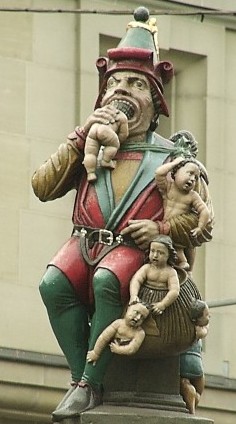
During our stroll through town we saw most of the city's famous 11 fountains (each topped with a character based on biblical or Swiss folklore (such as Samson and a child-eating Ogre), we explored a beautiful 15th-century Cathedral, saw the riverfront brown bear dwellings where four brown bears--the symbol of Bern, as depicted on the canton's official seal--go about their business while locals and tourists alike observe.
Another great part of our stroll through Bern was visiting the apartment where Albert Einstein lived from 1902-05 and where he worked out his famous theory of relativity. It is now a museum dedicated to Einstein, and although our Swiss Passes would have allowed us free admission for the 20-minute audio tour, we settled for a few pictures out front and headed to one of the bustling squares for lunch.
The trademark Swiss dish Rosti, which I explained in Saturday's blog post, originiated in Bern. So naturally that's what we both got at a place called le Mazot. I got the "rosti sportsman," which is basically hash browns topped with a slice of ham, covered in melted swiss cheese and topped with a sunny-side-up egg.
Cooked eggs here look different than they do in the states. Our egg yokes have a yellow look in comparison to the bright "Florida Gator" orange that they take on here. I'm no expert on the matter, but my guess is that it may have to do with the chickens here lacking some of the steroids and other chemicals that we feed to or inject into the chickens back home.
We did a bit of shopping in Bern. I bought a great water- and wind-proof jacket that will surely serve me well on future hiking trips. It is made by a really cool brand I had never heard of before: Sherpa Adventure Gear. Brooke looked at dozens of nice, Swiss-manufactured watches but couldn't settle on one. Many of the nicer watches sold for up to CHF 4000 (close to $4,000).
On our way back to Gimmelwald in the afternoon, we got off the train at the Interlaken West station and walked through that city all the way to the East station. Brooke made a good find at one of the shops, purchasing a red Swiss World Cup team jersey that I must admit is pretty cool. The Swiss play tomorrow at 4 p.m. and we'd like to find a nice little pub or restaurant with a good scene in which to watch the game, but we'll see how the day progresses.
I'm still holding up hope that the clouds will clear out of the area and make a paragliding trip a possibility for tomorrow.
Dinner this evening was at the restaurant in Hotel Alpina, which is up in Murren. Brooke and I each had the Raclette, which is another trademark Swiss dish of melted cheese with boiled potatoes and cucumbers and onions. Like all our other meals thus far, it was stellar.
Well, walking all around Bern and Interlaken really wore us out, so are ready to call it a night. We hope everyone back home is doing well. Aside from missing Crockett terribly already, we are having an extraordinary time here.
Tom
David didn't disappoint with the breakfast spread. Bread with fruit spread and butter, yogurt with granola-type cereal, dried meats and cheeses as well as apple and banana slices--it was all as fresh as it could possibly be. I'd love to know how recently the milk that made the butter and yogurt was sloshing around in the belly of a cow on some nearby hillside.
After breakfast, we took the cable car down to the Schilthornbahn station, caught a Post bus to Lauterbrunnen and boarded the train once again headed to Bern.
The national capital, Bern is a fantastic city that boasts a lot of great personality. I could definitely spend more time there. It was especially meaningful to Brooke and I due to the fact that Bern is where our boy Crockett can trace his ancestry (Bernese Mountain Dog)!
During our stroll through town we saw most of the city's famous 11 fountains (each topped with a character based on biblical or Swiss folklore (such as Samson and a child-eating Ogre), we explored a beautiful 15th-century Cathedral, saw the riverfront brown bear dwellings where four brown bears--the symbol of Bern, as depicted on the canton's official seal--go about their business while locals and tourists alike observe.
Another great part of our stroll through Bern was visiting the apartment where Albert Einstein lived from 1902-05 and where he worked out his famous theory of relativity. It is now a museum dedicated to Einstein, and although our Swiss Passes would have allowed us free admission for the 20-minute audio tour, we settled for a few pictures out front and headed to one of the bustling squares for lunch.
The trademark Swiss dish Rosti, which I explained in Saturday's blog post, originiated in Bern. So naturally that's what we both got at a place called le Mazot. I got the "rosti sportsman," which is basically hash browns topped with a slice of ham, covered in melted swiss cheese and topped with a sunny-side-up egg.
Cooked eggs here look different than they do in the states. Our egg yokes have a yellow look in comparison to the bright "Florida Gator" orange that they take on here. I'm no expert on the matter, but my guess is that it may have to do with the chickens here lacking some of the steroids and other chemicals that we feed to or inject into the chickens back home.
We did a bit of shopping in Bern. I bought a great water- and wind-proof jacket that will surely serve me well on future hiking trips. It is made by a really cool brand I had never heard of before: Sherpa Adventure Gear. Brooke looked at dozens of nice, Swiss-manufactured watches but couldn't settle on one. Many of the nicer watches sold for up to CHF 4000 (close to $4,000).
On our way back to Gimmelwald in the afternoon, we got off the train at the Interlaken West station and walked through that city all the way to the East station. Brooke made a good find at one of the shops, purchasing a red Swiss World Cup team jersey that I must admit is pretty cool. The Swiss play tomorrow at 4 p.m. and we'd like to find a nice little pub or restaurant with a good scene in which to watch the game, but we'll see how the day progresses.
I'm still holding up hope that the clouds will clear out of the area and make a paragliding trip a possibility for tomorrow.
Dinner this evening was at the restaurant in Hotel Alpina, which is up in Murren. Brooke and I each had the Raclette, which is another trademark Swiss dish of melted cheese with boiled potatoes and cucumbers and onions. Like all our other meals thus far, it was stellar.
Well, walking all around Bern and Interlaken really wore us out, so are ready to call it a night. We hope everyone back home is doing well. Aside from missing Crockett terribly already, we are having an extraordinary time here.
Tom
Saturday, June 19, 2010
Europe: Summer 2010
Nearing 11 months since my last post. Apparently I don't have as much time (or perhaps desire) for blogging as I initially thought...
Brooke and I arrived in Switzerland this morning (Saturday, June 19). For the next two weeks we'll be rolling six hours ahead of our friends in the Eastern Time Zone. Our first flight from Knoxville to Atlanta was simple enough--a quick 30 minutes. I then passed the time during our brief layover in the Peach State by downing some low-quality Panda Express as we waited to board the nine-hour flight to Zurich.
Invictus and The Time Traveler's Wife were two of the three movies that were shown during the flight (I didn't recognize the other one). I watched The Time Traveler's Wife while Brooke slept. I'd seen it before, but it's a great one.
Brooke definitely made the wrong choice on the in-flight dinner entree. My manicotti was quite good and certainly had to have been better than the "chicken" product she selected. Breakfast was awful: a banana and an "egg muffin." I told Brooke afterward that the egg seemed more like a folded up chunk of yoga mat.
As proof of Swiss efficiency, we got our passports stamped and had our checked baggage in hand no more than 5-6 minutes after walking off the jetway. We caught a quick train from the airport to the Zurich main station, where I got our Swiss Passes validated before we started off toward Gimmelwald.
To begin, we rode from Zurich to Interlaken with a quick train change in Bern (did you know Craig Pinkerton can trace his family heritage back to a particular house in Bern?). From Interlaken, we took one more train to Lauterbrunnen than caught a Post Bus to the Schilthornbahn station near Stechelberg.
The tiny mountain village of Gimmelwald--elevation 4485 feet--is accessible via a five-minute cable car ride from the Schilthornbahn station. It was GREAT to arrive back in Gimmelwald after we fell in love with the place during our honeymoon in August 2006. Once again, we are staying at Pension Gimmelwald, but the Edelweiss Room, which we stayed in previously, was not available this time so we are in simply "Room 1."
The Pension is now under new ownership as well. A friendly Englishman named David Waterhouse now owns the place; we literally just spent about an hour hanging out down at the bar and he visited with us a bit He has two vintage Jack Daniels signs hanging behind the bar. There were quite a few folks from the Mountain Hostel next door who came over to the Pension's restaurant and bar for some good food and drink, so it was a good scene down there, with David blaring some great blues music (which I can hear from our room as I type this; no complaints).
After we checked in, we took about a three-hour nap before getting cleaned up and taking the cable car up one village to Murren. There, we ate a fabulous, fresh dinner at Restaurant Eiger Stubli. Brooke had lamb with scalloped potatos and a beer, while I had veal cutlets with fresh vegetables, a local specialty called rosti (similar to hash browns) and Ramseier apple juice (carbonated; it's awesome). I can't begin to describe how good it all was, and aside from one other German-speaking couple, we had the place all to ourselves.
It has been raining all day here in the Berner Oberland region, so it's as if you are walking around above the clouds as it's quite foggy. When the cable car descends from Gimmelwald back down the mountain, it quickly disappears from sight all together after less than 100 yards.
One downside is that if this weather doesn't clear up before we move to Murten in a few days, we may not be able to go paragliding. It will be too dangerous and there won't be enough of an updraft through the valley.
On a more positive note, I'm doing pretty good with my attempt to begin conversations in German. Tip for American travelers: at least show people that you are willing to make an EFFORT to speak the local language when you are visiting somewhere. I think folks appreciate that. Some of the Americans we cross paths with embarrass me with how they act and how loud they are.
Well, a trip back to Piz Gloria may be in order tomorrow (look it up online, especially if you're a James Bond fan). Dinner on top of the world, perhaps?
Gutentag,
Tom
PS: One more link. We've never been to Murren during the time of year when this occurs, but it looks pretty interesting.
Brooke and I arrived in Switzerland this morning (Saturday, June 19). For the next two weeks we'll be rolling six hours ahead of our friends in the Eastern Time Zone. Our first flight from Knoxville to Atlanta was simple enough--a quick 30 minutes. I then passed the time during our brief layover in the Peach State by downing some low-quality Panda Express as we waited to board the nine-hour flight to Zurich.
Invictus and The Time Traveler's Wife were two of the three movies that were shown during the flight (I didn't recognize the other one). I watched The Time Traveler's Wife while Brooke slept. I'd seen it before, but it's a great one.
Brooke definitely made the wrong choice on the in-flight dinner entree. My manicotti was quite good and certainly had to have been better than the "chicken" product she selected. Breakfast was awful: a banana and an "egg muffin." I told Brooke afterward that the egg seemed more like a folded up chunk of yoga mat.
As proof of Swiss efficiency, we got our passports stamped and had our checked baggage in hand no more than 5-6 minutes after walking off the jetway. We caught a quick train from the airport to the Zurich main station, where I got our Swiss Passes validated before we started off toward Gimmelwald.
To begin, we rode from Zurich to Interlaken with a quick train change in Bern (did you know Craig Pinkerton can trace his family heritage back to a particular house in Bern?). From Interlaken, we took one more train to Lauterbrunnen than caught a Post Bus to the Schilthornbahn station near Stechelberg.
The tiny mountain village of Gimmelwald--elevation 4485 feet--is accessible via a five-minute cable car ride from the Schilthornbahn station. It was GREAT to arrive back in Gimmelwald after we fell in love with the place during our honeymoon in August 2006. Once again, we are staying at Pension Gimmelwald, but the Edelweiss Room, which we stayed in previously, was not available this time so we are in simply "Room 1."
The Pension is now under new ownership as well. A friendly Englishman named David Waterhouse now owns the place; we literally just spent about an hour hanging out down at the bar and he visited with us a bit He has two vintage Jack Daniels signs hanging behind the bar. There were quite a few folks from the Mountain Hostel next door who came over to the Pension's restaurant and bar for some good food and drink, so it was a good scene down there, with David blaring some great blues music (which I can hear from our room as I type this; no complaints).
After we checked in, we took about a three-hour nap before getting cleaned up and taking the cable car up one village to Murren. There, we ate a fabulous, fresh dinner at Restaurant Eiger Stubli. Brooke had lamb with scalloped potatos and a beer, while I had veal cutlets with fresh vegetables, a local specialty called rosti (similar to hash browns) and Ramseier apple juice (carbonated; it's awesome). I can't begin to describe how good it all was, and aside from one other German-speaking couple, we had the place all to ourselves.
It has been raining all day here in the Berner Oberland region, so it's as if you are walking around above the clouds as it's quite foggy. When the cable car descends from Gimmelwald back down the mountain, it quickly disappears from sight all together after less than 100 yards.
One downside is that if this weather doesn't clear up before we move to Murten in a few days, we may not be able to go paragliding. It will be too dangerous and there won't be enough of an updraft through the valley.
On a more positive note, I'm doing pretty good with my attempt to begin conversations in German. Tip for American travelers: at least show people that you are willing to make an EFFORT to speak the local language when you are visiting somewhere. I think folks appreciate that. Some of the Americans we cross paths with embarrass me with how they act and how loud they are.
Well, a trip back to Piz Gloria may be in order tomorrow (look it up online, especially if you're a James Bond fan). Dinner on top of the world, perhaps?
Gutentag,
Tom
PS: One more link. We've never been to Murren during the time of year when this occurs, but it looks pretty interesting.
Friday, July 24, 2009
Biting The Hand That Feeds You
Publicity Man. Sports Information Director. Communications Coordinator. Media Relations Specialist.
The job titles in my industry have changed through the years, but the primary job function has remained the same (for the most part). My business card happens to read: Associate Sports Information Director.
I promote the athletics programs at my university by helping the media do its job. Many of my daily responsibilities revolve around assisting our media contingent so that it can easily cover the programs, coaches and student-athletes at my institution/alma mater.
I enjoy that part of the job. And while differences arise from time to time, I believe that most media members appreciate the efforts my colleagues and I put forth on their behalf (and yes, I do understand my institution also benefits from said efforts).
The rise of the social-networking era and the evolution of online information dissemination have changed the landscape of how news is covered. Many reputable outlets risk their credibility on a daily basis by placing an emphasis on "being first" rather than "being accurate."
Along with this trend also has come a tendency to shamelessly transform typically mundane topics into items of newsworthiness. In doing this, I've recently seen one media outlet bite the hand that feeds it, so to speak.
WE'VE ALWAYS BEEN ON YOUR SIDE
On July 14, 2009, I received two virtually identical e-mails almost simultaneously. The Football Writers Association of America (FWAA) and the United State Basketball Writers Association (USBWA) had issued a joint statement regarding media guides--the extensive, sport-specific books published by universities to provide the media with a useful tool to assist them in their coverage of the schools' respective programs.
It was around this time of year that a nationwide debate was raging among college administrators on whether or not to eliminate printed media guides as part of a comprehensive push toward "cost containment" within collegiate athletic departments.
The statement by the FWAA and USBWA supported the stance taken by the Southeastern Conference--of which my university is a member--to "preserve 208-page printed media guides for football and basketball."
The journalist-driven organizations believed there was "still a strong need for printed guides in football and basketball" after polling their respective memberships.
Officials within my department were among some of the SEC's most vocal proponents of preserving media guides as a means of assisting the media.
Bottom Line: We recognized that the media found value and usefulness in the guides, and thus, we fought to be able to continue to publish them. You want it? We print it.
While my contributions to the football guide the last couple years have been quite minimal, my colleagues go to great lengths--and dedicate most of their summer--to publish a tremendously thorough volume. They pour their hearts into the annual project and it shows; our football guides have won numerous "Best in the Nation" citations from the College Sports Information Directors of America (CoSIDA) in recent years.
OUCH, CHARLIE!*
Knowing how much time and effort goes into the guide every year, it was awfully disheartening earlier this week when--on the very day the guides were distributed to the media fresh off the press--one local editor decided that a minor misprint in the book was somehow, in itself, newsworthy.
The editor decided to post a short article basically poking fun at the oversight. And he did not put a name with the article, attributing it only to "staff." In addition to the article (which ran online and in the following day's print edition) the error was Tweeted about as well.
"Disheartening" is how I characterize my feelings on this issue because our staff goes to great lengths to publish a valuable tool for the media, only (in this instance) to see the media pick it apart and poke fun at its oversights.
What the editor might as well have said: "Thanks for printing this 208-page resource that my staff and I will reference time and time again in the coming months. It will help us write accurate stories. It will help us meet deadline after night games in the fall. I appreciate it so much that I'm going to point out a minor oversight to thousands of readers throughout the world who otherwise would likely never to have noticed.
"Oh yeah, and can you help arrange an in-depth one-on-one interview with your head coach and one of my writers?"
OF ALL THE PEOPLE TO PUSH US OFF THE LEDGE...
Errors happen in publishing. It's a part of life in that business. I know a former newspaper man who says, "If you ever publish a perfect newspaper, you might as well quit."
When you print a 208-page book, there are going to be misprints, errors and oversights.
If anyone were to appreciate this, I would expect that it would be someone in the newspaper business. Especially someone at a paper that prints errors and inaccuracies with regularity (as I suppose most do, because like I said, these things are just part of the process).
But one newspaper veteran lacked such an appreciation. He saw an opportunity to take a shot and he took it. And my colleagues and I will brush it off and continue to help him and his staff do their job more easily than they could without us.
This blog is my small outlet to vent; very few will read it. But at least I get to bang out my feelings on my keyboard and leave it at that. There will be no grudge or get-backs. Vindictiveness does one no good--especially in this business.
The frustration from this whole episode has been tempered somewhat by the overwhelming outpouring of support from numerous local and regional media members. Even many of the trigger-happy editor's colleagues reached out to apologize, empathize and even admit embarrassment.
That softens the blow a bit. But the fact remains that someone took a run at my "teammates." And that hurts. They've probably handled it more gracefully than I have.
Regardless, we'll all turn the other cheek.
We'll provide assistance however we can tomorrow. Even if "tomorrow" is a Friday evening or a Sunday night.
We just enjoy that part of the job. And we're not going to let anyone ruin it for us.
* a reference to a viral YouTube classic, search: Charlie Bit My Finger
The job titles in my industry have changed through the years, but the primary job function has remained the same (for the most part). My business card happens to read: Associate Sports Information Director.
I promote the athletics programs at my university by helping the media do its job. Many of my daily responsibilities revolve around assisting our media contingent so that it can easily cover the programs, coaches and student-athletes at my institution/alma mater.
I enjoy that part of the job. And while differences arise from time to time, I believe that most media members appreciate the efforts my colleagues and I put forth on their behalf (and yes, I do understand my institution also benefits from said efforts).
The rise of the social-networking era and the evolution of online information dissemination have changed the landscape of how news is covered. Many reputable outlets risk their credibility on a daily basis by placing an emphasis on "being first" rather than "being accurate."
Along with this trend also has come a tendency to shamelessly transform typically mundane topics into items of newsworthiness. In doing this, I've recently seen one media outlet bite the hand that feeds it, so to speak.
WE'VE ALWAYS BEEN ON YOUR SIDE
On July 14, 2009, I received two virtually identical e-mails almost simultaneously. The Football Writers Association of America (FWAA) and the United State Basketball Writers Association (USBWA) had issued a joint statement regarding media guides--the extensive, sport-specific books published by universities to provide the media with a useful tool to assist them in their coverage of the schools' respective programs.
It was around this time of year that a nationwide debate was raging among college administrators on whether or not to eliminate printed media guides as part of a comprehensive push toward "cost containment" within collegiate athletic departments.
The statement by the FWAA and USBWA supported the stance taken by the Southeastern Conference--of which my university is a member--to "preserve 208-page printed media guides for football and basketball."
The journalist-driven organizations believed there was "still a strong need for printed guides in football and basketball" after polling their respective memberships.
Officials within my department were among some of the SEC's most vocal proponents of preserving media guides as a means of assisting the media.
Bottom Line: We recognized that the media found value and usefulness in the guides, and thus, we fought to be able to continue to publish them. You want it? We print it.
While my contributions to the football guide the last couple years have been quite minimal, my colleagues go to great lengths--and dedicate most of their summer--to publish a tremendously thorough volume. They pour their hearts into the annual project and it shows; our football guides have won numerous "Best in the Nation" citations from the College Sports Information Directors of America (CoSIDA) in recent years.
OUCH, CHARLIE!*
Knowing how much time and effort goes into the guide every year, it was awfully disheartening earlier this week when--on the very day the guides were distributed to the media fresh off the press--one local editor decided that a minor misprint in the book was somehow, in itself, newsworthy.
The editor decided to post a short article basically poking fun at the oversight. And he did not put a name with the article, attributing it only to "staff." In addition to the article (which ran online and in the following day's print edition) the error was Tweeted about as well.
"Disheartening" is how I characterize my feelings on this issue because our staff goes to great lengths to publish a valuable tool for the media, only (in this instance) to see the media pick it apart and poke fun at its oversights.
What the editor might as well have said: "Thanks for printing this 208-page resource that my staff and I will reference time and time again in the coming months. It will help us write accurate stories. It will help us meet deadline after night games in the fall. I appreciate it so much that I'm going to point out a minor oversight to thousands of readers throughout the world who otherwise would likely never to have noticed.
"Oh yeah, and can you help arrange an in-depth one-on-one interview with your head coach and one of my writers?"
OF ALL THE PEOPLE TO PUSH US OFF THE LEDGE...
Errors happen in publishing. It's a part of life in that business. I know a former newspaper man who says, "If you ever publish a perfect newspaper, you might as well quit."
When you print a 208-page book, there are going to be misprints, errors and oversights.
If anyone were to appreciate this, I would expect that it would be someone in the newspaper business. Especially someone at a paper that prints errors and inaccuracies with regularity (as I suppose most do, because like I said, these things are just part of the process).
But one newspaper veteran lacked such an appreciation. He saw an opportunity to take a shot and he took it. And my colleagues and I will brush it off and continue to help him and his staff do their job more easily than they could without us.
This blog is my small outlet to vent; very few will read it. But at least I get to bang out my feelings on my keyboard and leave it at that. There will be no grudge or get-backs. Vindictiveness does one no good--especially in this business.
The frustration from this whole episode has been tempered somewhat by the overwhelming outpouring of support from numerous local and regional media members. Even many of the trigger-happy editor's colleagues reached out to apologize, empathize and even admit embarrassment.
That softens the blow a bit. But the fact remains that someone took a run at my "teammates." And that hurts. They've probably handled it more gracefully than I have.
Regardless, we'll all turn the other cheek.
We'll provide assistance however we can tomorrow. Even if "tomorrow" is a Friday evening or a Sunday night.
We just enjoy that part of the job. And we're not going to let anyone ruin it for us.
* a reference to a viral YouTube classic, search: Charlie Bit My Finger
Tuesday, June 2, 2009
Other Statistical Head-Scratchers and Ridiculous Rules
I was thrilled last week when my first attempt at blogging fueled some good discussion and thoughtful comments about not only the method of recording defensive stats in college football, but also a number of other aspects of stat-keeping and rules in collegiate athletics.
A number of folks--mostly SIDs or people with a background in athletic media relations--brought up some really good points. So I thought I'd share a few of them here in this entry of ConspicuouSIDeas...
One former hoops SID raised a great point about assists in college basketball. Before we go further, let's take a look at how the NCAA's 2009 Official Basketball Statisticians' Manual (accessible here) defines an assist:
A player is credited with an assist when the player makes, in the judgment of the statistician, the principal pass contributing directly to a field goal (or an awarded score of two or three points). Only one assist is to be credited on any field goal and only when the pass was a major part of the play. The same player cannot be credited with an assist and a field goal made on the same possession.
Such a pass should be either (a) a pass that finds a player free after he or she has maneuvered without the ball for a positional advantage, or (b) a pass that gives the receiving player a positional advantage he or she otherwise would not have had.
Philosophy.
An assist should be more than a routine pass that just happens to be followed by a field goal. It should be a conscious effort to find the open player or to help a player work free. There should not be a limit on the number of dribbles by the receiver. It is not even necessary that the assist be given on the last pass. There is no restraint on the distance or type of shot made, for these are not the crucial factors in determining whether an assist should be credited.
Despite the verbatim wording that an assist is a "principal pass contributing directly to a field goal (or an awarded score of two or three points)," there is an instance in college basketball when a player can make a pass that leads to "an awarded score of two or three points" but is not credited with an assist--that instance is when the shooter is fouled and converts the resulting free throws.
Failure to credit an assist in this instance makes little to no sense.
Picture this hardwood scenario...
Johnson makes a perfect back-door bounce pass to Brown down on the block, and an opposing defender scrambles over and fouls Brown, thus forcing Brown to miss his layup. But Brown goes to the free-throw line and converts both his free throws.
Did Johnson's pass lead to "an awarded score of two points?"
Yes. Brown would never have had possession of the ball on the block or been able to attempt the layup were it not for Johnson's pass.
But because the resulting points came via free throws, no assist for Johnson.
The foul was out of Johnson's control. But the pass made the play possible. If you really break it down, not only did the pass lead directly to two points, it also led to the opposing team increasing its number of team fouls for the half, which could ultimately lead to more points via bonus free throws.
Some folks may make the following argument: What if Brown made only one of his two free throws?
Well despite my personal feeling that every solitary point is crucial (particularly if your team ends up on the winning side of a one-point ballgame), I'm willing to cede the fact that the statisticians' manual defines an assist as a pass that leads to two or three points. Devaluing the assist is not my intent here.
So even though Brown's 1-for-2 trip to the charity stripe may be enough to make the difference in the game, I'm fine with it also being enough to wipe a potential assist off Johnson's line in the final boxscore.
I'd sure love to see this rule tweaked. What's your take on this one?
From the desk of a BCS-conference football SID--a timing suggestion that ought to become reality on the college gridiron...
In the final minute of a quarter, why does the game clock not display tenths of a second? In the final minute of a half in college basketball, the final minute counts down using tenths of a second starting at 59.9 seconds to play.
Is the closing minute of a quarter in college football any less important?
The person who brought this timing flaw to my attention offers a plausible reason as to why there isn't more of a groundswell to change this aspect of game timing--there is no horn/buzzer in football. The final second ticks off and that's that.
But what if a team had the benefit of knowing--more precisely--exactly how much time it possessed in the closing minute of a game on a potential scoring drive?
Think of it this way. In football, at the very instant when the clock displays 59 seconds remaining, there is really 59.9 seconds remaining (because a full second passed at the start of the quarter before the clock first ticked to 14:59).
Thus, when the clock displays 00 seconds remaining, in reality there is 0.9 seconds remaining. But due to the absence of a final horn, as soon as the officials see the game clock at zeros, the quarter/half/game is over.
Every season, teams are conceivably being deprived of one more play. One play can change a drive, a quarter, a game, a season. Thank goodness at least college basketball has it right.
Pat Forde, Chris Low, Dennis Dodd--somebody, please! Either prove this line of thinking wrong or bring some national attention to the issue.
And lastly, courtesy of yet another former longtime hoops SID, a rules issue pertaining to jersey numbers in college football...
Joe Fan may be apathetic to whether or not his favorite college football team is allowed to dress out two players wearing the same number, but there is little doubt that double numbers are a pain in the butt for stat crews as well as media covering games.
In 2006, Cal's football team had a pair of standout players who both wore No. 1: wide receiver DeSean "Cross the Goal Line Before You Discard the Ball" Jackson, and linebacker Worrell Williams. Both players were starters. And that was just one of many duos who wore the same number.
As my friend wisely asserted, "Double numbers should only be used when dressing 100+ players at home games, (with) the second number going to a walk-on who is not likely to play."
One cause for this confusing problem is that during the recruiting process, coaches promise certain numbers to certain prospects, regardless of whether or not another player on the roster is already wearing that number.
And don't come at me with the "as long as one player plays defense and the other plays offense it doesn't matter" argument, either.
Stat crews don't want to deal with the headache of double numbers, and I'd guess that writers and broadcasters feel the same way.
Thanks to all who gave me feedback on my first-ever blog attempt. Many of you helped give me some great fodder for this entry, which I hope will lead to some more good discussion. If you enjoy the blog, don't forget to follow me on Twitter @TomSatkowiak.
A number of folks--mostly SIDs or people with a background in athletic media relations--brought up some really good points. So I thought I'd share a few of them here in this entry of ConspicuouSIDeas...
One former hoops SID raised a great point about assists in college basketball. Before we go further, let's take a look at how the NCAA's 2009 Official Basketball Statisticians' Manual (accessible here) defines an assist:
A player is credited with an assist when the player makes, in the judgment of the statistician, the principal pass contributing directly to a field goal (or an awarded score of two or three points). Only one assist is to be credited on any field goal and only when the pass was a major part of the play. The same player cannot be credited with an assist and a field goal made on the same possession.
Such a pass should be either (a) a pass that finds a player free after he or she has maneuvered without the ball for a positional advantage, or (b) a pass that gives the receiving player a positional advantage he or she otherwise would not have had.
Philosophy.
An assist should be more than a routine pass that just happens to be followed by a field goal. It should be a conscious effort to find the open player or to help a player work free. There should not be a limit on the number of dribbles by the receiver. It is not even necessary that the assist be given on the last pass. There is no restraint on the distance or type of shot made, for these are not the crucial factors in determining whether an assist should be credited.
Despite the verbatim wording that an assist is a "principal pass contributing directly to a field goal (or an awarded score of two or three points)," there is an instance in college basketball when a player can make a pass that leads to "an awarded score of two or three points" but is not credited with an assist--that instance is when the shooter is fouled and converts the resulting free throws.
Failure to credit an assist in this instance makes little to no sense.
Picture this hardwood scenario...
Johnson makes a perfect back-door bounce pass to Brown down on the block, and an opposing defender scrambles over and fouls Brown, thus forcing Brown to miss his layup. But Brown goes to the free-throw line and converts both his free throws.
Did Johnson's pass lead to "an awarded score of two points?"
Yes. Brown would never have had possession of the ball on the block or been able to attempt the layup were it not for Johnson's pass.
But because the resulting points came via free throws, no assist for Johnson.
The foul was out of Johnson's control. But the pass made the play possible. If you really break it down, not only did the pass lead directly to two points, it also led to the opposing team increasing its number of team fouls for the half, which could ultimately lead to more points via bonus free throws.
Some folks may make the following argument: What if Brown made only one of his two free throws?
Well despite my personal feeling that every solitary point is crucial (particularly if your team ends up on the winning side of a one-point ballgame), I'm willing to cede the fact that the statisticians' manual defines an assist as a pass that leads to two or three points. Devaluing the assist is not my intent here.
So even though Brown's 1-for-2 trip to the charity stripe may be enough to make the difference in the game, I'm fine with it also being enough to wipe a potential assist off Johnson's line in the final boxscore.
I'd sure love to see this rule tweaked. What's your take on this one?
From the desk of a BCS-conference football SID--a timing suggestion that ought to become reality on the college gridiron...
In the final minute of a quarter, why does the game clock not display tenths of a second? In the final minute of a half in college basketball, the final minute counts down using tenths of a second starting at 59.9 seconds to play.
Is the closing minute of a quarter in college football any less important?
The person who brought this timing flaw to my attention offers a plausible reason as to why there isn't more of a groundswell to change this aspect of game timing--there is no horn/buzzer in football. The final second ticks off and that's that.
But what if a team had the benefit of knowing--more precisely--exactly how much time it possessed in the closing minute of a game on a potential scoring drive?
Think of it this way. In football, at the very instant when the clock displays 59 seconds remaining, there is really 59.9 seconds remaining (because a full second passed at the start of the quarter before the clock first ticked to 14:59).
Thus, when the clock displays 00 seconds remaining, in reality there is 0.9 seconds remaining. But due to the absence of a final horn, as soon as the officials see the game clock at zeros, the quarter/half/game is over.
Every season, teams are conceivably being deprived of one more play. One play can change a drive, a quarter, a game, a season. Thank goodness at least college basketball has it right.
Pat Forde, Chris Low, Dennis Dodd--somebody, please! Either prove this line of thinking wrong or bring some national attention to the issue.
And lastly, courtesy of yet another former longtime hoops SID, a rules issue pertaining to jersey numbers in college football...
Joe Fan may be apathetic to whether or not his favorite college football team is allowed to dress out two players wearing the same number, but there is little doubt that double numbers are a pain in the butt for stat crews as well as media covering games.
In 2006, Cal's football team had a pair of standout players who both wore No. 1: wide receiver DeSean "Cross the Goal Line Before You Discard the Ball" Jackson, and linebacker Worrell Williams. Both players were starters. And that was just one of many duos who wore the same number.
As my friend wisely asserted, "Double numbers should only be used when dressing 100+ players at home games, (with) the second number going to a walk-on who is not likely to play."
One cause for this confusing problem is that during the recruiting process, coaches promise certain numbers to certain prospects, regardless of whether or not another player on the roster is already wearing that number.
And don't come at me with the "as long as one player plays defense and the other plays offense it doesn't matter" argument, either.
Stat crews don't want to deal with the headache of double numbers, and I'd guess that writers and broadcasters feel the same way.
Thanks to all who gave me feedback on my first-ever blog attempt. Many of you helped give me some great fodder for this entry, which I hope will lead to some more good discussion. If you enjoy the blog, don't forget to follow me on Twitter @TomSatkowiak.
Subscribe to:
Posts (Atom)
.jpg)